
Exclusively represented in Denmark by Rarité
Maison Ex Nihilo
Auxey-Duresses · Bourgogne
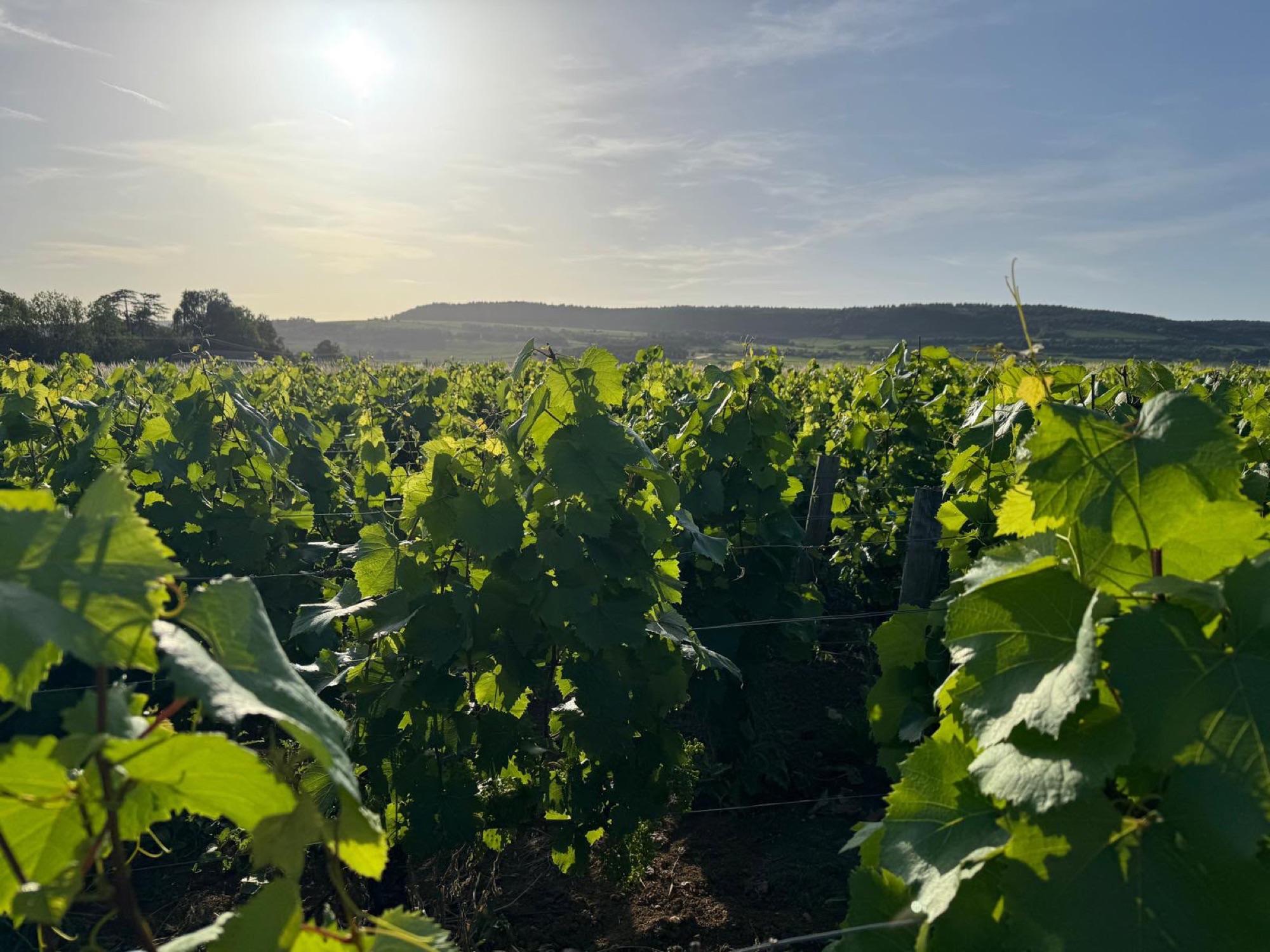
Ex Nihilo is one of the most convincing new haute couture négociant projects I have encountered in Burgundy. Morgane and Alban Desazars work in microscopic quantities and with a level of detail that all but dissolves the line between négoce and domaine. They work the same parcels themselves year after year, follow the vines through the season and pick the fruit themselves. Every parcel is vinified separately, and in the cellar an almost extreme preoccupation with detail continues.
“This is modern Burgundy at an unusually high level.”
Nicklas, Rarité
Behind the domaine
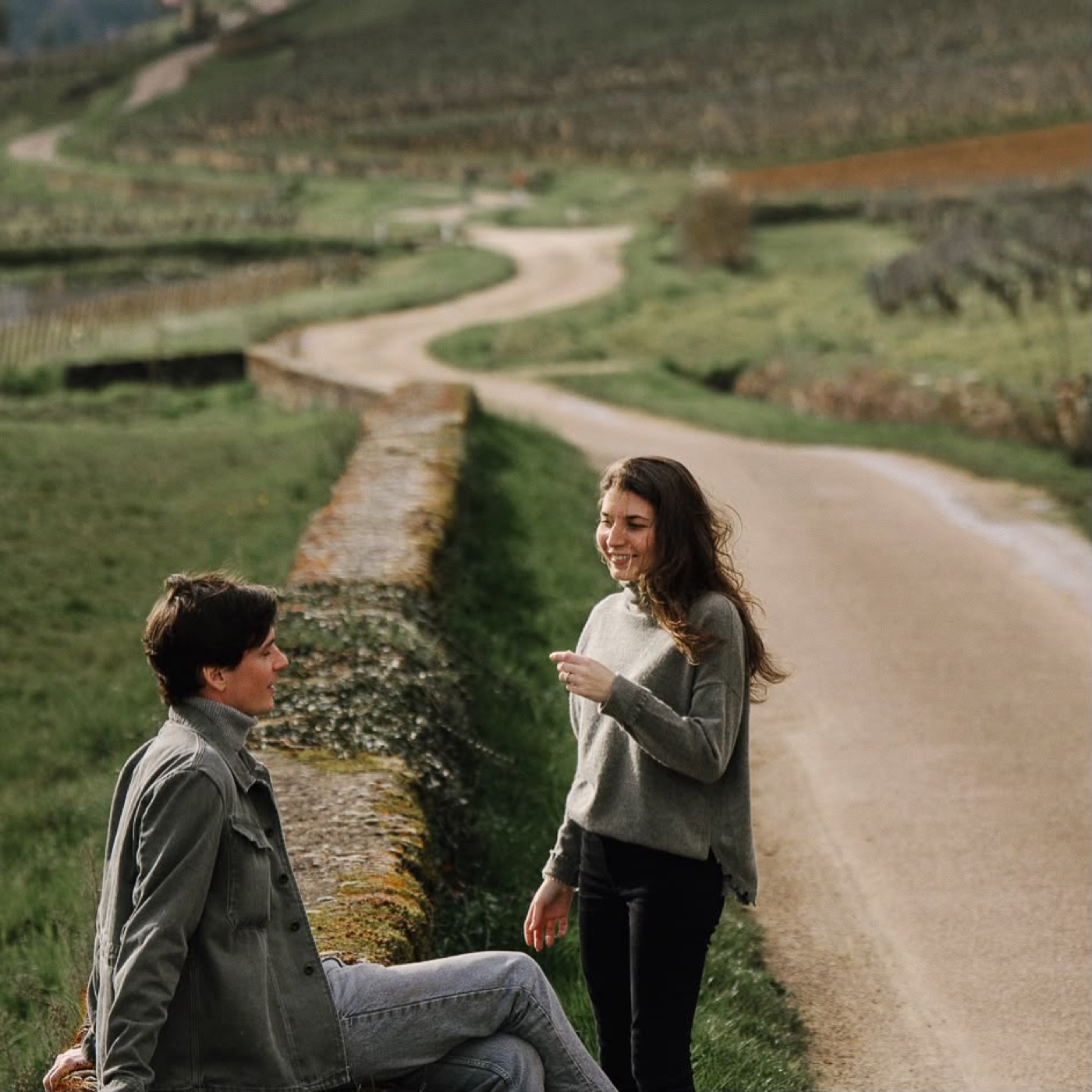
Morgane & Alban Desazars
Ex Nihilo was created by Morgane and Alban Desazars and is based in Auxey-Duresses, in the middle of the Côte de Beaune. Their path into Burgundy is not the story of an inherited domaine or generations of family parcels. The project was built from the ground up around a shared ambition to get as close to the terroir and the fruit as possible – hence the name Ex Nihilo.
Their roots lie partly in Champagne, and it shows in their uncompromising eye for pressing, purity and precision. In a very short time they have built an intimate knowledge of the parcels they work with: vine by vine, row by row.
The term négociant therefore only tells part of the story. With the exception of their coming Aligoté from their own parcel in Puligny-Montrachet, the wines are currently made from purchased fruit — but Morgane and Alban do not simply buy grapes at the cellar door. They work the parcels themselves, follow them through the growing season and harvest themselves. The collaborations are continuous – they return to the same terroirs.
That places Ex Nihilo at the most ambitious end of haute couture négoce in Burgundy. The freedom to work with exceptional parcels is combined with a domaine-like closeness to the vineyard and microscopic precision in the cellar. The prestige of the appellation is secondary; the terroir and the fruit come first.
Vineyards and cellar
From haute couture négoce towards their own domaine
Ex Nihilo is also taking its first step towards a true domaine. Morgane and Alban have bought 0.85 hectares in Puligny-Montrachet on Les Costières du Rond Pré, planted with Aligoté in 2011. The parcel is being converted to organic farming, and the work includes sélection massale.
Here the entire chain becomes their own – soil, vine, farming, harvest and vinification – while the micro-négoce model continues to give them the freedom to work with special terroirs across the Côte de Beaune. Ex Nihilo shows how far the négociant model can be lifted when it is treated with the same rigour as a top domaine.
Pressing as precision work
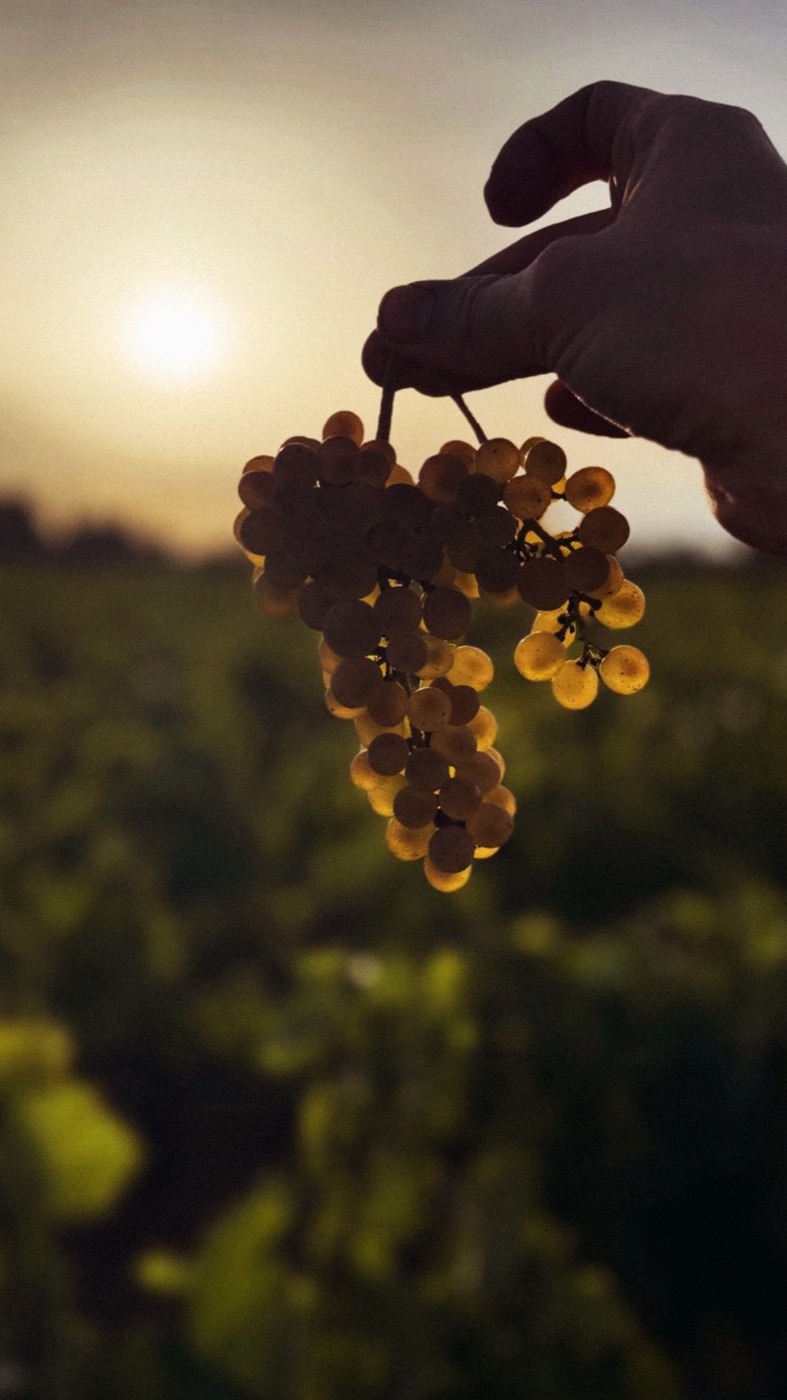
At Ex Nihilo, vinification begins in the vineyard. Morgane and Alban follow the parcels closely, work the vines themselves and set the harvest date according to the balance they are looking for in each parcel. The freshness has to be present already in the fruit.
In the cellar, the press is central. Alban works actively with the entire pressing cycle: around 0.25 bar at the start, a slow flow of must over two to three hours and a gradual rise towards roughly 1.25 bar. The must is tasted continuously, and the pressing is ended according to the character of the grapes and the must – not according to a fixed programme.
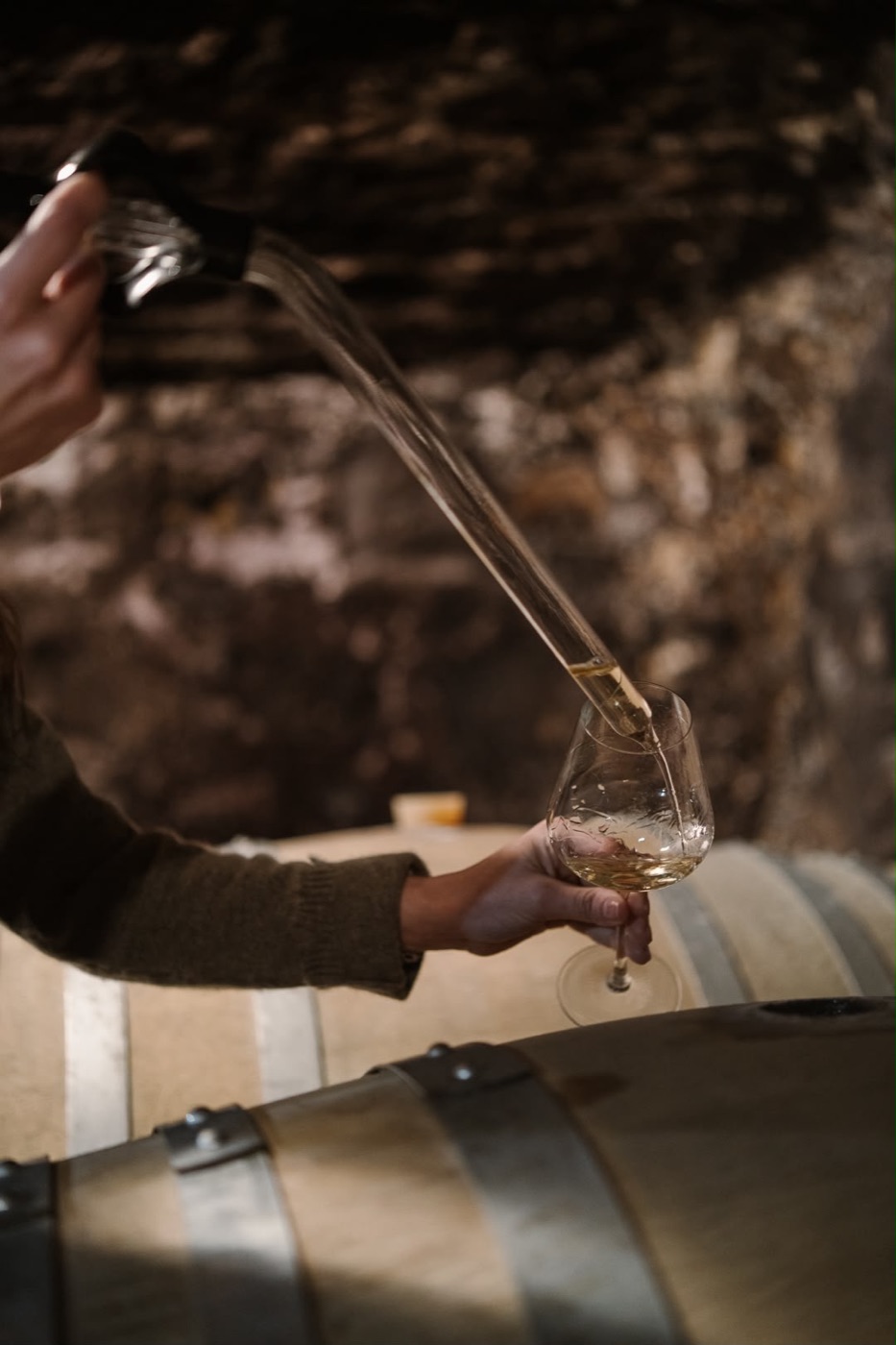
The white grapes are picked in small 13–15 kg crates. After pressing, the must typically settles by gravity for around 48 hours before fermentation starts spontaneously. Élevage is adapted to each parcel, and new oak is used sparingly and precisely: Mainbey 2025 rests in older barrels, Les Champans sees 13 per cent new oak, Odyssée 20 per cent and Porusot Dessus one-year-old barrels.
For Le Petit Clos Rousseau the Pinot Noir grapes are destemmed, followed by a cold pre-fermentation maceration, a long and gentle cuvaison and light remontages. The pressing is kept soft to preserve the silk of the tannin and the lift of the fruit. The technique is meticulous, but the aim is simple: purity, energy and as precise a rendering of the terroir as possible.
The style
The wines already have a strikingly clear identity: remarkably fresh and taut, with delicate aromatics, chalky minerality and a cool, vertical energy. There is concentration and substance, but never weight. The oak is precisely integrated, and the terroir always stands first.
It is in the glass that Ex Nihilo's level of ambition truly becomes clear. The whites have a rare combination of concentration and tension. The fruit is pure, delicate and often floral, with chalky, saline energy underneath. The acidity is alive without turning hard, and a discreet flinty or lightly reductive note gives several of the wines an almost electric tension.
This is white Burgundy of great intensity, but also charm and generosity. Nothing feels constructed; the meticulous work seems, on the contrary, to make the wines freer and the terroir clearer.
Le Petit Clos Rousseau shows the same philosophy in Pinot Noir. Old vines give depth, but the wine has a rare lightness, perfume and silky structure. For me it is quite simply the best Santenay I have tasted.
The wines
Hautes-Côtes de Beaune, Mainbey Régionale
Chardonnay · stony plateau at 470 m · clay and limestone · vines approx. 15 years old · 9 months in older barrels
Mainbey comes from Chardonnay on a stony plateau at 470 metres, surrounded by forest. The parcel faces south and south-west, the soil is clay and limestone, and the vines are around 15 years old. The 2025 was picked on 9 September and rests nine months in older barrels. Citrus, grapefruit, chalk and salt frame a taut, lively acidity, with fresh almond and discreet brioche as texture. A Hautes-Côtes with a precision and energy far above the normal level of the appellation. 2025 will be the final vintage; from 2026 it is succeeded by Aligoté from Les Costières du Rond Pré.
Bourgogne Côte d’Or, Les Champans Régionale
Chardonnay · single parcel in Puligny-Montrachet · clay and limestone · 13% new oak · 2,606 bottles
Les Champans shows precisely why you should look past the appellation at Ex Nihilo. The grapes come from a single Chardonnay parcel in Puligny-Montrachet on clay and limestone. The 2025 was picked on 26 August and rests nine months in barrel with just 13 per cent new oak. Chalk, lemon and white fruit meet a fine toasted texture and an almost Puligny-like linear tension. A Bourgogne with a level of ambition far above the hierarchy on the label. Only 2,606 bottles were produced.
Auxey-Duresses, Odyssée Village
Chardonnay · vines approx. 20 years old · south-east-facing, organically farmed parcel · 20% new oak · 1,474 bottles
Odyssée comes from roughly 20-year-old Chardonnay vines on a south-east-facing, organically farmed parcel of clay and limestone. The name refers to the journey that brought Morgane and Alban to Auxey-Duresses. The wine rests nine months in barrel with 20 per cent new oak. Pear, orange blossom and hazelnut gain a creamier depth, while acidity and mineral tension keep the expression upright. Generous and complex, yet still with Ex Nihilo's characteristic precision. Production is just 1,474 bottles.
Saint-Aubin 1er Cru, Les Combes au Sud Premier Cru
Chardonnay · east-facing at 260–280 m · marl and stony material · cool, chalk-driven terroir
Les Combes au Sud lies east-facing at 260–280 metres at the end of the dry valley behind Saint-Aubin, on marl and stony material. The cool, chalk-driven terroir suits Ex Nihilo's style perfectly. White peach, pear and acacia sit above hazelnut and discreet toast, but the core is firm acidity, chalk and length. More depth and breadth than the lower cuvées, without losing the vertical energy. A truly great and complete Saint-Aubin.
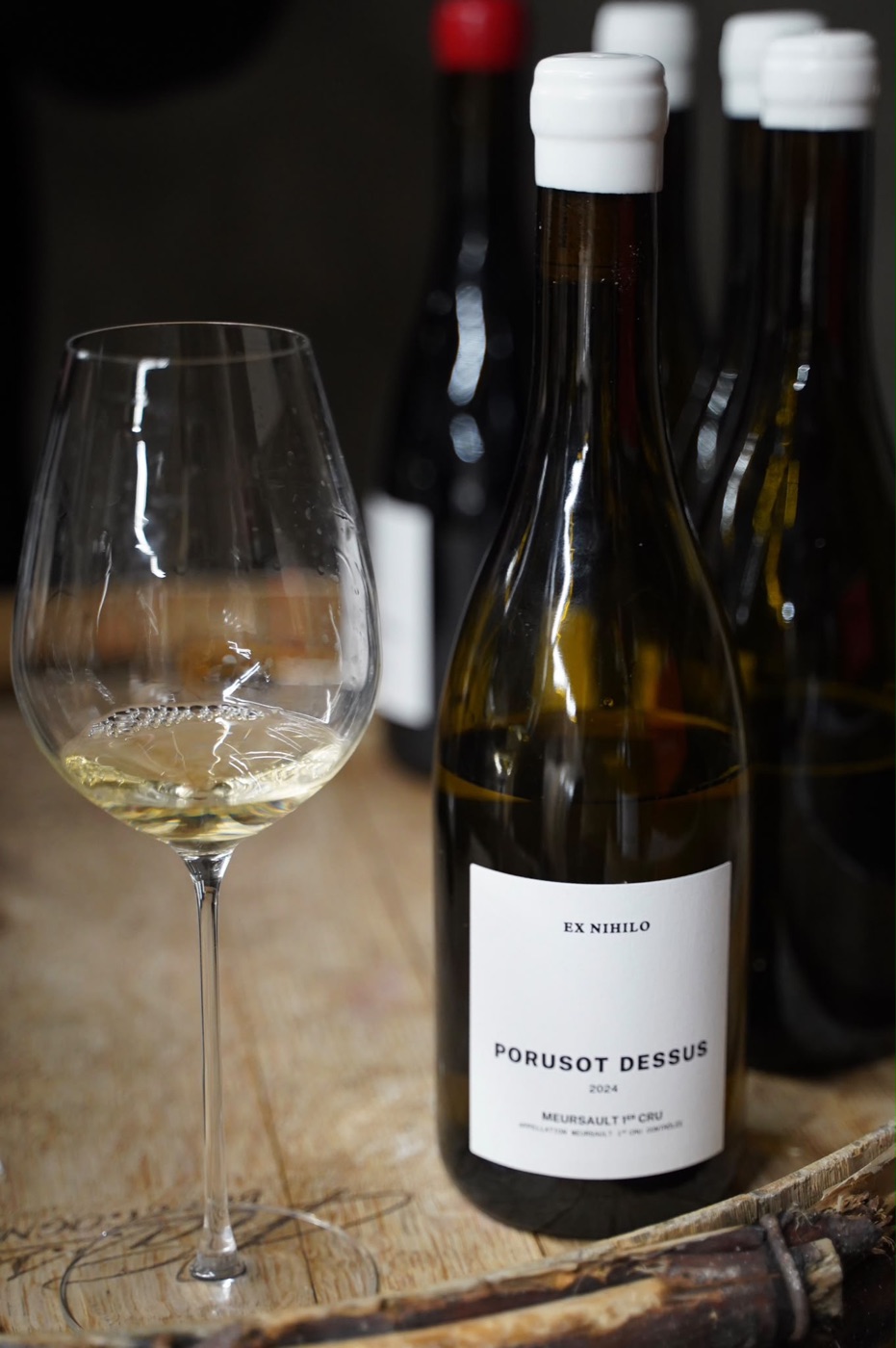
Meursault 1er Cru, Porusot Dessus Premier Cru
Chardonnay · east-facing stony slope at 230–280 m · 30–50-year-old vines · sélection massale · one-year-old barrels
Porusot Dessus is among Ex Nihilo's rarest and most ambitious wines. The parcel lies east-facing at 230–280 metres on a stony slope, with 30–50-year-old vines and sélection massale in the upper part. The 2025 was picked as early as 22 August and rests nine months in one-year-old barrels with no new oak. Mirabelle, white fruit, flowers and brioche are met by a firm, saline and chalky structure. Great Meursault with depth and power, but without unnecessary weight – a wine that shows just how high Ex Nihilo is already working.
Santenay 1er Cru, Le Petit Clos Rousseau Premier Cru
Pinot Noir · vines approx. 80 years old · 8 days' cold maceration · approx. 20 days' cuvaison · 18% new oak
Le Petit Clos Rousseau comes from roughly 80-year-old Pinot Noir vines on a south-east-facing parcel at 230–280 metres, marked by clay, limestone and numerous limestone faults. The grapes are destemmed, given eight days of cold pre-fermentation maceration and around 20 days of gentle cuvaison. The wine rests nine months in barrel with 18 per cent new oak. Cherry, strawberry, violet and rose carry an almost weightless perfume above silky tannins and a deep, living core from the old vines. For me it is the best Santenay I have tasted – an extraordinary wine that moves the reference point for the appellation.
Available wines and vintages appear on the price list.